
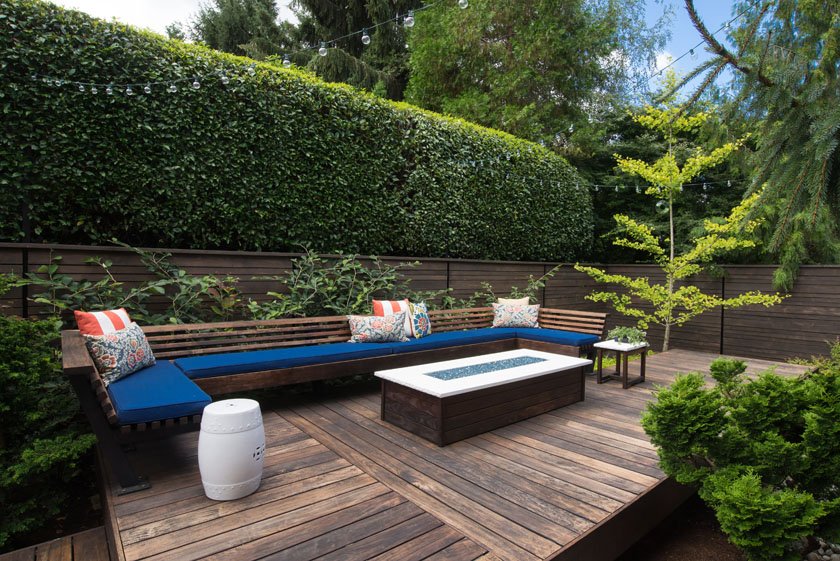
Patios and Decks in the Bay Area: Design-Build by Momentum Construction
Momentum Construction designs and builds patios and decks across the San Francisco Bay Area and Peninsula. As a licensed design-build contractor (CSLB License #1028128) in business since 2017, we handle materials, structural framing, permits and code compliance from one accountable team based in Belmont, CA.
Wood vs Composite Decking: Which Material Lasts Longer?
Decking material drives both cost and long-term maintenance. The main options trade upfront price against durability:
- Pressure-treated wood – the lowest upfront cost and widely available. It requires regular cleaning, sealing and staining every 1 to 3 years and is prone to warping and splitting over time.
- Redwood and cedar – naturally rot and insect resistant with a premium appearance suited to Bay Area homes. Still needs periodic sealing to hold its color and resist weathering.
- Composite (such as Trex) – higher upfront cost than wood but minimal maintenance: no sealing or staining, strong fade and stain resistance, and a typical service life of 25 years or more. It will not develop the grain character of natural wood.
- Tropical hardwoods (such as ipe) – very dense, durable and long-lasting, with a high material cost and specialized fastening and tooling requirements.
In short: wood costs less now and more over time in upkeep; composite costs more now and less over its life. We help you weigh the two against your budget, look and how the deck will be used.
Patio Options: Pavers, Concrete and Stone
Patios sit at grade and generally do not need framing, which changes the calculation. Common choices include interlocking pavers (repairable unit by unit, many patterns), poured concrete (economical for large areas, can be stamped or colored), and natural stone such as flagstone (premium appearance, higher cost). Proper base preparation and drainage matter more than the surface material for long-term performance.
Footings, Framing and Code Safety
A deck is a structure, and the parts you do not see determine whether it is safe. Sound construction depends on correctly sized and spaced concrete footings, a properly flashed ledger attachment where the deck meets the house (a common failure point), and code-compliant framing, joist spacing and hardware. Guardrails, baluster spacing and stairs must meet California Residential Code requirements, and surfaces are sloped and detailed for drainage to protect both the deck and the home.
When Does a Deck Need a Permit?
As of 2026, a building permit is generally required for decks attached to the house and for elevated decks above a set height threshold (commonly around 30 inches above grade, though local jurisdictions vary). Low ground-level patios and small platforms often do not. As a licensed contractor, Momentum pulls the required permits and builds to code so the work passes inspection.
Timeline, Cost Factors and Value
A typical deck or patio build runs from a few days to a few weeks of on-site work, plus design and permitting time beforehand. Cost depends on size, material, elevation, site access, footing and drainage requirements, and railing and stair complexity – so figures vary widely. As of 2026, wood decks typically start lower per square foot, while composite and stone projects sit at the higher end. A well-built deck or patio extends usable outdoor living space and can add resale value to a Peninsula home.
Why Momentum Construction?
As a design-build contractor, Momentum carries a project from concept through framing, surface and final inspection under one contract, which keeps design intent, structure and code compliance aligned. We have served Belmont, San Mateo, Redwood City, San Carlos, Burlingame, Foster City, San Francisco and the wider Bay Area since 2017.
Is a composite deck worth the extra cost?
If you want to minimize maintenance over decades, composite usually pays back in saved sealing, staining and replacement labor. If upfront budget is the priority or you prefer natural wood grain, redwood or cedar remains a strong choice.
How long do patios and decks last?
A maintained wood deck commonly lasts 15 to 20 years, composite 25 years or more, and a properly installed paver or stone patio can last decades. Footing quality, drainage and upkeep are the main factors.
Ready to plan your patio or deck? Call Momentum Construction at (844) 403-2612 to schedule a design-build consultation anywhere on the Peninsula or in the wider Bay Area.